
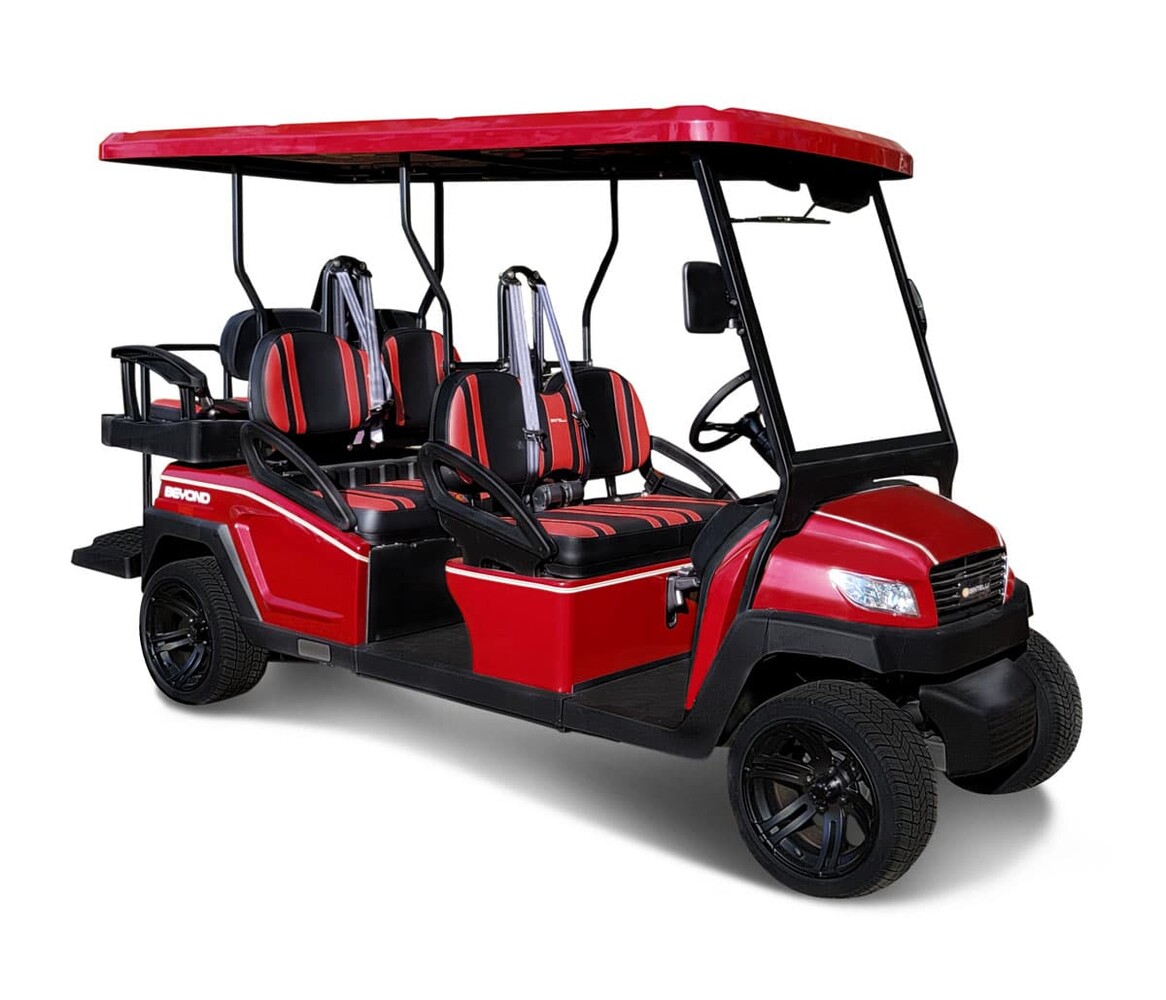
If you ride on the South Carolina side of Lake Wylie, there’s good news. The state updated its golf cart law in 2025. 2025 Act No. 64 added a new Section 56-2-90 and repealed the old Section 56-2-105, effective May 22, 2025. Here’s what that means for you. (This is general information, not legal advice. Local rules still apply.)
Getting a golf cart permit
To drive a golf cart on a public highway, the owner needs a permit decal and registration certificate from the SC DMV. You’ll need proof of ownership, proof of liability insurance and a $5 fee. The decal must be replaced every five years, or sooner if you move (S.C. Code § 56-2-90(A)).
Who can drive
The driver must be at least 16, hold a valid driver’s license, and carry the registration certificate, proof of insurance and their license (§ 56-2-90(B)). Passengers under 12 must wear a fastened seat belt on public streets (§ 56-2-90(E)).
The default rules
Unless your town or county has adopted its own ordinance, a permitted golf cart may (§ 56-2-90(D)):
- be driven during daylight hours only
- be driven only on secondary highways with a speed limit of 35 mph or less
- stay within four miles of the address on the registration, or within four miles of a gated community’s entrance if you live inside one
- cross a faster highway at an intersection
What local governments can change
Cities, and counties in their unincorporated areas, can set the hours, methods and locations for golf cart use by ordinance. They can allow night driving for carts with working headlights and taillights, and they can create separated golf cart paths. In every case, carts are limited to roads with a speed limit of 35 mph or less (§ 56-2-90(C)). Local governments also can’t require proof of property ownership or a long-term lease to get a decal (§ 56-2-90(C)(4)). Check with your city or county for its current rules.
LSVs in South Carolina
A low-speed vehicle follows a different set of rules (S.C. Code § 56-2-100):
- Where it can drive: highways with a posted speed limit of 35 mph or less. It can cross faster highways at intersections.
- Equipment: it must meet Federal Motor Vehicle Safety Standard 500 (49 C.F.R. § 571.500) at all times.
- Local and state limits: local governments can adopt stricter rules or prohibit LSVs on certain streets for safety, and SCDOT can do the same.
The big difference is that the four-mile and daylight-only limits in § 56-2-90 apply to golf carts, not LSVs. That’s why so many lake families choose a street-legal LSV.
Ready to ride?
Our street-legal carts are built to the federal LSV standard, and we’re happy to help with the paperwork. Shop inventory, get your payment, or stop by and take one for a spin.