
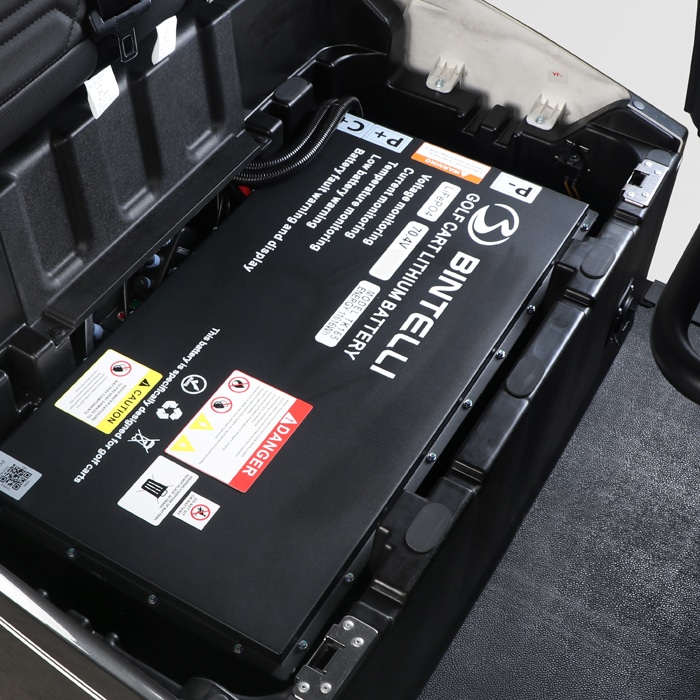
Batteries are one of the most common things we talk about with customers, and for good reason. The battery decides how far you ride, how much upkeep you do and how much your cart is worth down the road. Here’s a friendly, side-by-side look at lithium and lead-acid, using manufacturer data wherever we can.
The quick answer
For most street-legal cart owners, lithium is the better long-term choice. It’s lighter, needs no watering and typically lasts years longer. Lead-acid still costs less up front and can make sense on a tight budget or for light, occasional use.
Lifespan and cycle life
Lifespan is where lithium really shines.
- Trojan Battery says its lithium batteries can last up to 10 years, while flooded lead-acid batteries may last 3 to 4 years and AGM batteries 4 to 5 years.
- Trojan’s OnePack XR lithium datasheet rates the battery at 4,000 cycles at 80% depth of discharge.
Trojan also notes that, depending on the equipment, you may need only half as many lithium battery replacements as flooded lead-acid over time.
Maintenance
Lead-acid (flooded): These batteries lose water while charging, so you’ll need to check levels and top them off with distilled water, keep terminals clean and avoid letting the plates dry out. Epic’s own battery guidance reminds owners to use distilled water only.
AGM: A sealed, spill-proof type of lead-acid that doesn’t need watering, though it still has a shorter life than lithium.
Lithium: Bintelli’s Beyond owner’s manual describes lithium batteries as sealed and “essentially maintenance free.” You’ll still want to check cables and connections, keep them clean and dry, recharge fully and pay attention to storage and cold temperatures. Following the manufacturer’s care guidance matters, because improper care can affect the battery warranty.
Weight
Lithium packs are much lighter than a full set of lead-acid batteries. Less weight can mean quicker acceleration, less strain on the suspension and gentler treatment of your lawn. As one example, Eco Battery lists its 51V 105Ah lithium bundle for ICON carts at 113 pounds for the complete pack.
Range
Range depends on the cart, the battery size, your speed, hills, passengers and the weather, so it’s tough to give one number. Here’s one real-world spec: Epic lists its 2025 E40, with a 51V/105Ah ECO lithium battery, at 25 miles per charge at 20 mph. Lithium batteries also tend to hold steadier power as they discharge, so the cart doesn’t feel as sluggish late in the ride.
Charging
Trojan says lithium batteries charge faster than flooded and other lead-acid options. Always use the charger designed for your battery. Epic and ICON warn that tampering with chargers or charger settings can void battery coverage.
Cost of ownership
Lithium costs more on day one. Over the life of the cart, though, the math often flips. Trojan says that, based on its specs and testing, the total cost of ownership for its lithium batteries can be lower than comparable flooded lead-acid, thanks to fewer replacements and less upkeep. Results vary with use and maintenance.
You can see what a lithium cart costs per month. Our payment examples are based on $1,500 down, OAC.
Warranty
Lithium batteries often carry long warranties, but the details matter:
- ICON EV and Epic list 8 to 10 years on Eco Battery lithium (3 to 5 years full replacement, then 5 years prorated, depending on the model), with registration required within 60 days.
- Aries EV lists 10 years (5/5 prorated) on its lithium battery, or the battery maker’s warranty if greater.
- AGM batteries in ICON and Epic carts are covered for 2 years.
Registering your battery on time is important. ICON, Epic and Eco Battery all say unregistered batteries default to much shorter coverage. Visit our warranty page for help.
Resale value
Buyers love lithium. A cart with a healthy lithium pack is usually easier to sell and worth more than the same cart with tired lead-acid batteries. If you’re planning to trade in, sell or consign down the road, lithium can pay you back.
Should you convert your current cart?
If your lead-acid batteries are near the end of their life, it’s the perfect time to consider lithium. Our lithium conversion service handles the battery, charger and setup. Want to make it street legal at the same time? Ask about our LSV conversion.
Frequently asked questions
How long does a lithium golf cart battery last?
Trojan says its lithium batteries can last up to 10 years, compared with 3 to 4 years for flooded lead-acid.
Do lithium batteries need maintenance?
Very little. No watering, but you should keep cables tight and clean, recharge fully and follow storage guidance.
Is lithium worth the extra cost?
For many owners, yes. Fewer replacements and less upkeep can lower total cost of ownership.
Can I put any lithium battery in my cart?
Not always. ICON and Epic say only Eco Battery lithium is authorized for their carts, and other batteries void their battery warranty.
Does lithium give more range?
It depends on battery size and conditions. Lithium tends to deliver steadier power through the charge.
Where can I see lithium carts?
Browse our street-legal inventory or visit any location. See our FAQ for more.
Ready to go lithium?
Every cart we sell is street ready, and we’d love to help you find the right battery for how you ride. Shop street-legal carts or ask about a lithium conversion.