
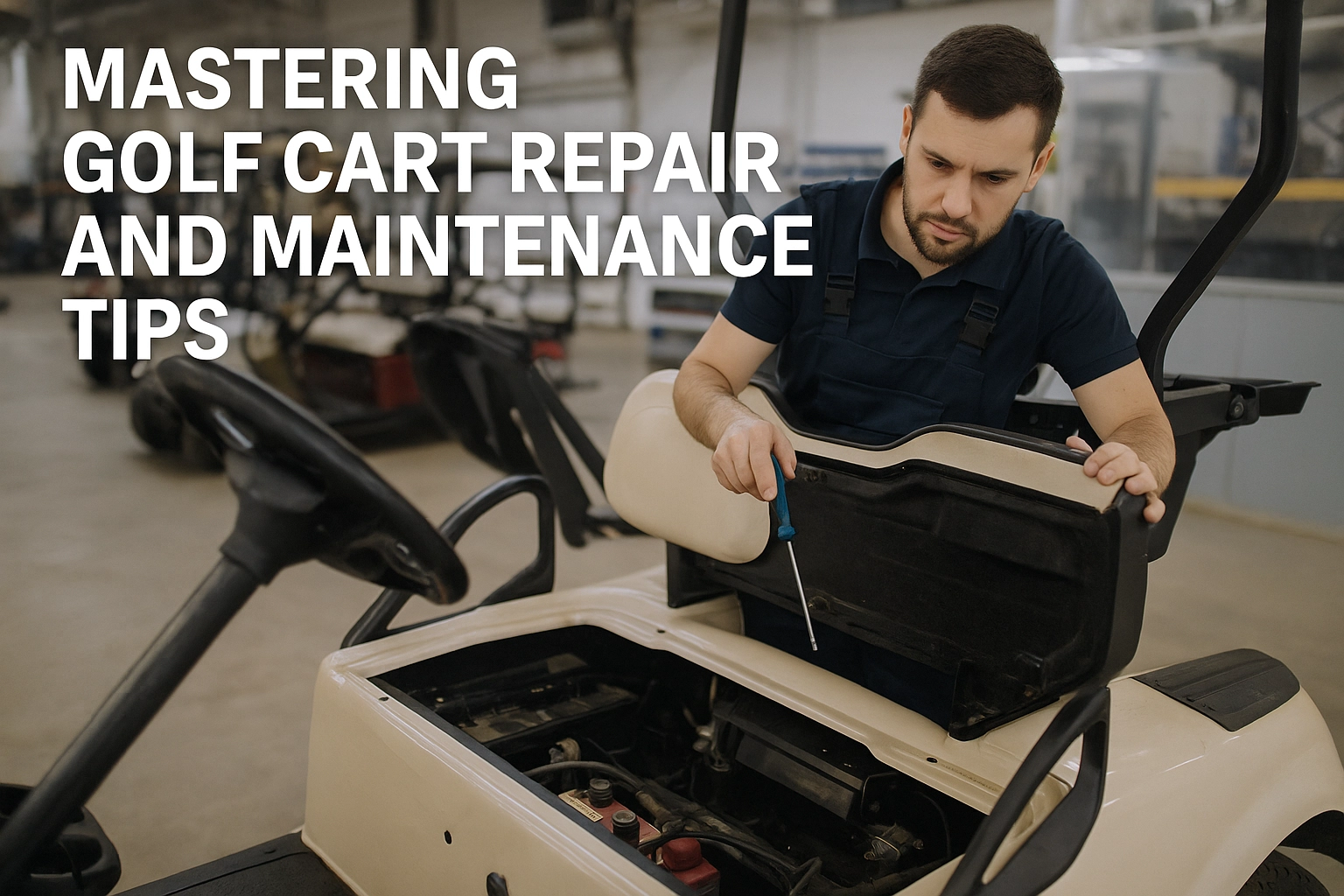
If your cart hesitates on hills, squeaks around corners, or clicks but refuses to move, you are in the right place. Mastering golf cart repair is less about luck and more about a clear process. With a few reliable checks and some routine care, you can keep your cart smooth, quiet, and ready for every round.
In this tutorial, we will walk through a practical, step by step approach designed for owners who already know the basics. You will learn how to diagnose common issues fast, from battery voltage drops and charger faults to solenoid clicks and controller errors. We will cover essential tools, a maintenance schedule you can stick to, and the right way to inspect tires, brakes, bearings, and steering. Gas models are included too, with tips for belts, cables, and filters. You will get prevention strategies, quick on course fixes, and clear thresholds for when to call a pro. By the end, you will have a confident workflow, fewer surprises, and more time driving than waiting on the cart barn.
Understanding Golf Cart Battery Maintenance
Regular checks and battery types
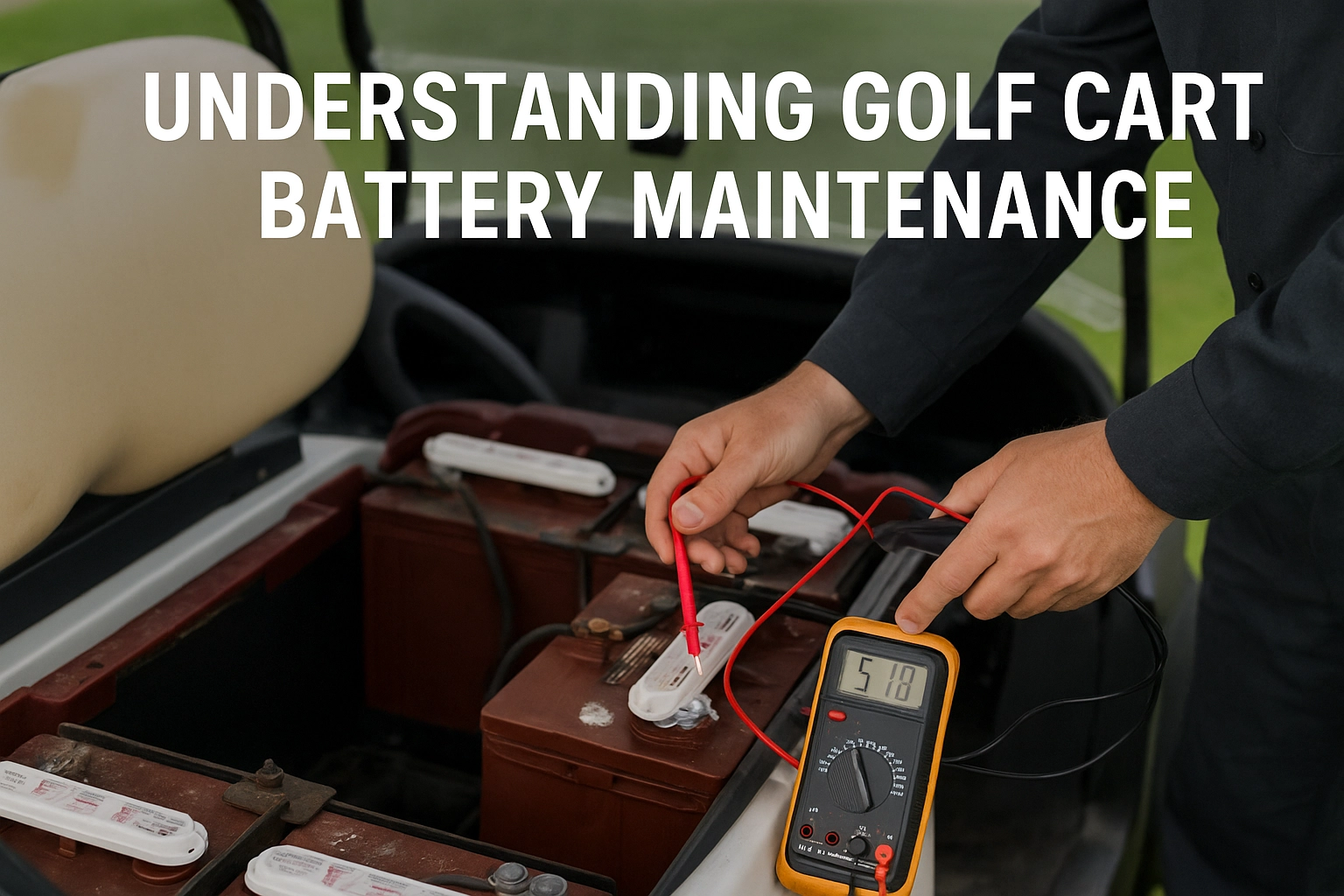
Batteries are the heart of your cart, so a quick monthly inspection keeps performance crisp and avoids downtime. Start with a visual check for bulging cases, damp tops, or white terminal corrosion, then verify pack voltage and note any single battery that sags more under load than its neighbors. For flooded lead-acid, confirm electrolyte covers the plates and top off with distilled water after a full charge, while lithium packs are largely maintenance free thanks to their battery management systems. Lithium commonly delivers 8 to 12 years of service compared with about 3 to 5 for lead-acid, according to this overview of lithium vs lead-acid battery life expectations.
Safe charging on a 20 amp circuit and sulfation prevention
Charge on a dedicated 20 amp circuit so the charger gets steady power without sharing the line with refrigerators, air compressors, or space heaters. Use the manufacturer matched charger, plug directly into a GFCI outlet, avoid power strips and long extension cords, and confirm the plug and cord are warm at most, never hot, after 10 minutes. Ventilate the area while charging, lead-acid batteries can release hydrogen, and make sure the cart is in neutral with the run switch set correctly. To fight sulfation on lead-acid packs, recharge after every use and run an equalization charge roughly every 30 cycles, a practice highlighted in this guide on what kills golf cart batteries.
Lean on Queen City Carts for parts and advice
If you need help choosing batteries, sizing a charger, or diagnosing a weak cell, Queen City Carts can test your pack, recommend upgrades, and source durable cables, chargers, and trays. Whether you run Bintelli, EZGO, Star EV, Vivid EV, or EVolution, our team stocks quality lead-acid and lithium options along with the hardware to install them correctly. We can walk you through watering routines, smart charger settings, and lithium conversion considerations like weight savings and state of charge displays. Staying proactive with battery care preserves range, protects your investment, and reduces the chance you will need urgent golf cart repair in North Carolina.
Importance of Annual Maintenance Checks
When to schedule your annual service
Plan on a full inspection once a year or after roughly 100 hours of driving, whichever comes first. That cadence is widely recommended by manufacturers and service providers, and it helps catch small issues before they become big-ticket golf cart repair jobs. If you split time between neighborhood rides and course duty, those hours add up faster than you think, so set a reminder and log usage. This interval applies whether you run lead-acid or lithium packs, since wiring, brakes, and suspension still wear with time. For a quick reference on timing and scope, see why many shops advise you to service your cart annually or every 100 hours. With carts in North Carolina often costing $5,000 to $20,000 and prices trending upward, protecting that investment with routine care is smart.
What to inspect at each annual check
Focus on safety-critical and high-wear items first. In the drivetrain, look for loose motor mounts, worn splines, axle seal seepage, and abnormal gearcase noise, then check high-current cables for heat discoloration. On brakes, inspect shoes or pads, drums or rotors, and cables or hydraulic lines, then verify pedal free play and parking brake hold on an incline. For suspension, examine leaf spring bushings, shocks, tie rods, and kingpins, and confirm alignment to prevent cupping and range-robbing rolling resistance. This short list mirrors what many technicians do when they inspect drivetrain, brakes, and suspension.
A cleaning checklist that prevents problems
Clean the undercarriage and wheel wells to remove sand and salt that accelerate rust. Rinse the battery bay, then dry thoroughly; neutralize lead-acid residue with a mild baking-soda solution, taking care to keep it out of the cells. For lithium, keep terminals tight to spec and dust-free, and verify BMS indicators are normal. Wash the body, wipe seat hinges and rails, and clear debris from pedal pivots and steering joints. Clean components run cooler, resist corrosion, and maintain consistent braking and range.
How Queen City Carts makes annual checks count
Our technicians use a structured checklist that includes controller diagnostics, load testing, brake measurement, suspension fastener torque, and alignment checks. We document findings with photos, prioritize safety repairs, and install durable parts from our extensive inventory. You leave with a clear maintenance plan, not guesswork. Caught early, a frayed brake cable or loose tie rod is a quick fix that preserves tires, batteries, and driveline parts, extending the lifespan of your cart and keeping you confidently rolling all year.
Golf Cart Drivetrain: Basics and Tips
Drivetrain basics
Think of the drivetrain as the path that turns stored energy into motion. On electric carts it includes the batteries, controller, motor, and a transaxle with the differential. Gas carts add an engine, clutches or a CVT, a drive belt, and gearing to drive the wheels. Many street-legal electrics Queen City Carts carries, including Bintelli and Star EV, top out near 25 MPH, so a healthy drivetrain is essential for stability.
Maintenance essentials
For electric carts, battery health dictates torque. Lead-acid packs need clean terminals and correct water levels, while lithium packs rely on a BMS and never need watering; both benefit from consistent charging after use, as shown in these essential maintenance tips and this maintenance checklist. Inspect the motor for whine and the transaxle for seepage. On gas carts, change oil on schedule, replace air and fuel filters, inspect the drive belt for glazing or cracks, and perform a brake and chassis check like this summer maintenance guide recommends.
Alignment and tires
Alignment and rotation protect both ride quality and range. Aim for slight toe-in, typically about 1/16 to 1/8 inch, and rotate tires front to rear every 6 to 12 months or roughly 250 to 500 miles. Keep pressures even, in the 18 to 22 psi range unless your tire specifies otherwise. After any curb strike or lift kit install, recheck alignment, tie-rods, and kingpins to avoid feathered edges and a pull in the steering.
Wear signs and service
Catch drivetrain wear early to avoid bigger repairs. Common clues include grinding from the transaxle, a rhythmic click on turns that hints at axle or hub issues, belt chirp under load, and shudder on takeoff. Sluggish hill climbs, burnt rubber smells, or oily streaks at the differential are red flags to inspect. When these pop up, schedule golf cart repair with Queen City Carts, whose technicians service electric and gas drivetrains, stock durable parts, and can advise on lithium conversions, clutch work, or gear ratio changes.
Real-world Examples of Essential Golf Cart Upgrades
Popular upgrades: lift kits and LED lighting
Lift kits are a go-to for riders who split time between the course and neighborhood trails. A 3 to 6 inch lift accommodates 22 to 23 inch all-terrain tires, which improves approach angles and ground clearance for curbs, gravel, and grass. Expect tighter steering feel with larger tires, so plan on a proper alignment and torque check after installation. Pairing the lift with heavy-duty leafs or upgraded shocks helps keep handling predictable with passengers or cargo. LED light kits are another high-return upgrade, drawing less current while delivering brighter, wider beams for dusk and night driving, and many kits add turn signals and brake lights for street-legal communities.
Why many owners switch to lithium batteries
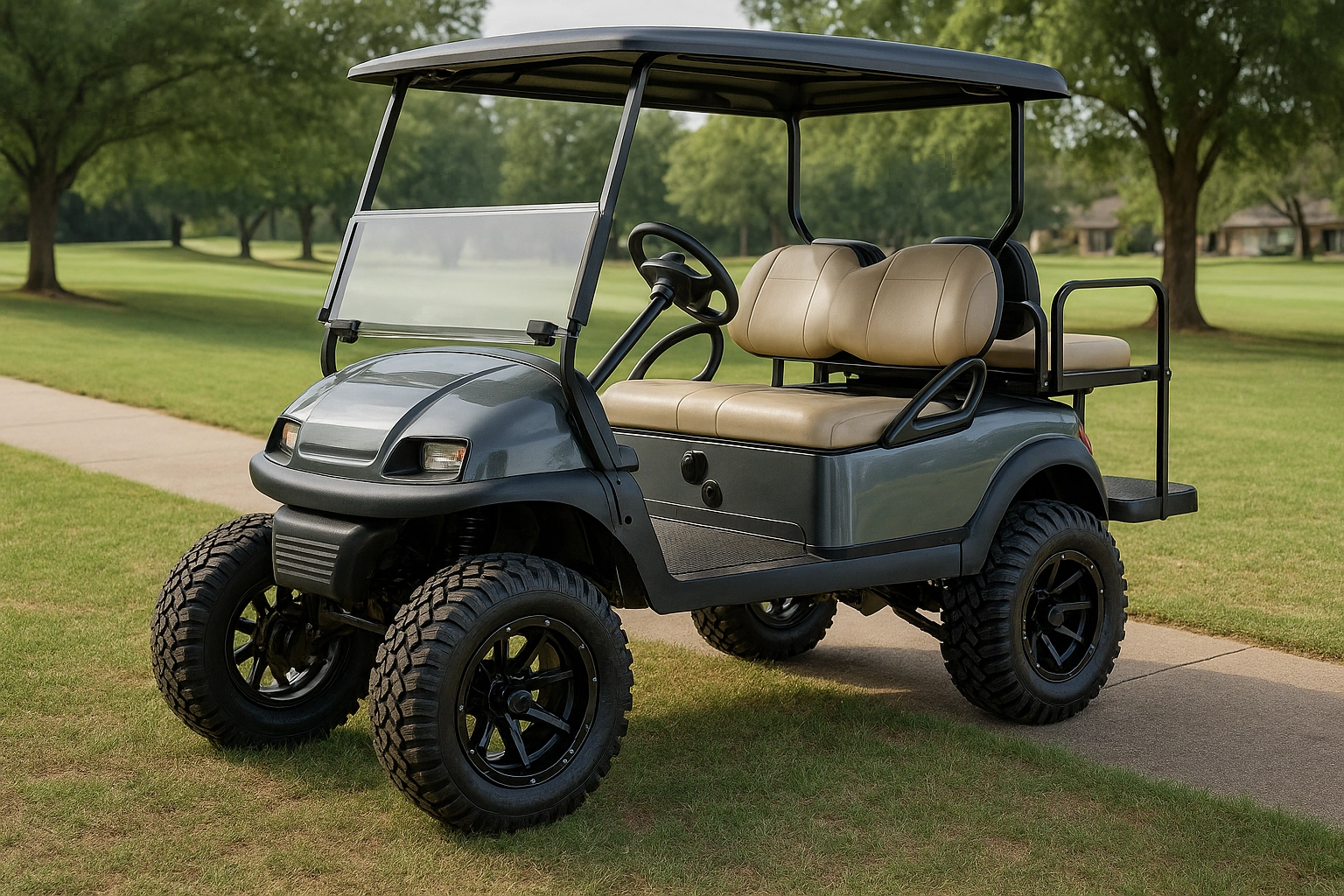
Lithium packs are popular because they deliver more usable energy with less weight. Compared with lead-acid, lithium batteries often last 2,000 to 5,000 cycles, far beyond the 300 to 500 typical of flooded lead-acid packs, which reduces long-term cost per mile lithium vs lead-acid cycle life. They are also largely maintenance free, and most charge to full in about 2 to 4 hours while maintaining stable voltage throughout the ride for consistent acceleration charging time and stable voltage. Dropping 100 to 200 pounds versus comparable lead-acid sets improves hill climbing and reduces strain on brakes and suspension. If you do stay with lead-acid, keep a smart charger handy and monitor state of charge to preserve lifespan.
Safety upgrades: brakes and seatbelts that keep up
As carts approach neighborhood-legal speeds around 25 MPH, stopping power matters. Front disc brake conversions can shorten stopping distances significantly, especially on lifted carts with larger tires. Retractable seatbelts keep riders secure over bumps and during sudden stops, and they are often required for on-road use in planned communities. Add side mirrors and a horn for better situational awareness. After any lift or tire change, re-adjust brake cables and test from 20 to 0 MPH in a safe area.
Case study: a Queen City Carts upgrade journey
A North Carolina customer brought in a 48V neighborhood cart for golf cart repair and a performance refresh. We installed a 4 inch lift with 23 inch tires, a full LED street-legal kit, a 105 Ah lithium pack, front disc brakes, and retractable seatbelts. Curb weight dropped by about 150 pounds, real-world range rose from roughly 12 miles to 26 to 30 miles per charge, and charging time fell to about 3 hours. Steering remained stable after alignment, and braking confidence improved on downhill sections. The result was a quieter, longer-lasting setup with fewer maintenance tasks and a more comfortable daily ride.
Practical Steps to Keep Your Golf Cart in Prime Condition
Plan your maintenance calendar
Set a maintenance calendar based on hours, not just dates or seasons. Most owners follow 100 to 200 hour checkpoints, matching widely recommended service intervals. Do two minute pre-ride checks, then weekly battery inspections and cable tightening. Monthly, torque lug nuts to spec, clean terminals, and update your maintenance log.
Build a compact toolkit
Build a compact toolkit that lives on the cart or in the garage. Include 10 and 13 millimeter wrenches, pliers, socket set, multimeter, and spare fuses. Add a tire gauge and inflator, dielectric grease, and a bright headlamp. Lead-acid needs a hydrometer and distilled water funnel; lithium benefits from insulated tools.
Adjust for the seasons
Seasonal shifts in North Carolina affect performance, range, and wear patterns. Cold can reduce available battery output 20 to 30 percent, so charge fully. Store lithium around 50 to 60 percent, and keep packs above 40 degrees. For lead-acid, maintain full charge, inspect water more often, and verify tire pressures.
Track it with tech
Use apps to automate reminders, track hours, and document golf cart repair history. Try EZCartCare maintenance tracking for schedules, logs, analytics, and shared access. The platform reports potential savings of more than $2,400 per year. If apps are not your style, mirror tasks in calendar and spreadsheet templates.
Partner with Queen City Carts
Partner with Queen City Carts for diagnostics, OEM-grade parts, and upgrade guidance. Schedule mid-season checks covering brakes, alignment, battery testing, and controller firmware updates. With prices projected to rise about $2,000 soon, timely care protects resale value. A market expanding around 6 percent CAGR favors well-documented service histories and clean carts.
Conclusion: Ensuring Golf Cart Longevity
Routine care that pays off
Consistent, simple habits are what keep a cart running like new. Do a 10 minute monthly battery check, looking for swelling, damp cases, or green corrosion, and clean terminals with a baking soda solution. For flooded lead acid packs, maintain electrolyte just above the plates with distilled water and run an equalization charge as your charger recommends; avoid discharging below 50 percent state of charge. For lithium packs, store between 20 and 80 percent when idle for weeks, keep the charger firmware updated, and never charge below freezing. Check tire pressure monthly, typically 18 to 22 PSI depending on tire size, and inspect brakes and cables at your 100 hour or annual service. A quick drivetrain scan, looking at controller logs, motor temperature, and transaxle seals, prevents the little issues that can appear when modern carts cruise at 25 MPH.
Stay current and tap trusted help
Routine care saves money because it extends component life, often from 3 to 5 years for lead acid batteries and 8 to 12 years for lithium, and it protects a cart investment that can cost 5,000 to 20,000 dollars in Raleigh and similar markets. With the North America golf cart market growing at a healthy pace, as shown in this market growth analysis, staying updated helps you plan upgrades and parts availability. Demand is rising for lift kits, lithium conversions, and LED lighting, and prices are expected to increase by roughly 2,000 dollars in the coming weeks, so a maintenance plus upgrade plan is smart. If you want expert guidance or hands on golf cart repair, explore Queen City Carts for diagnostics, battery health testing, and durable parts across Bintelli, EZGO, Star EV, Vivid EV, and EVolution. Keep learning through your owner’s manual, service classes, and trusted checklists, then log everything in an hours based calendar. The result is fewer surprises, more range per charge, and a cart ready for the next ride.